Ethanol: A Clean and Renewable Fuel of the Future
3 min readScience
Ethanol: A Clean and Renewable Fuel of the Future
What is Ethanol?
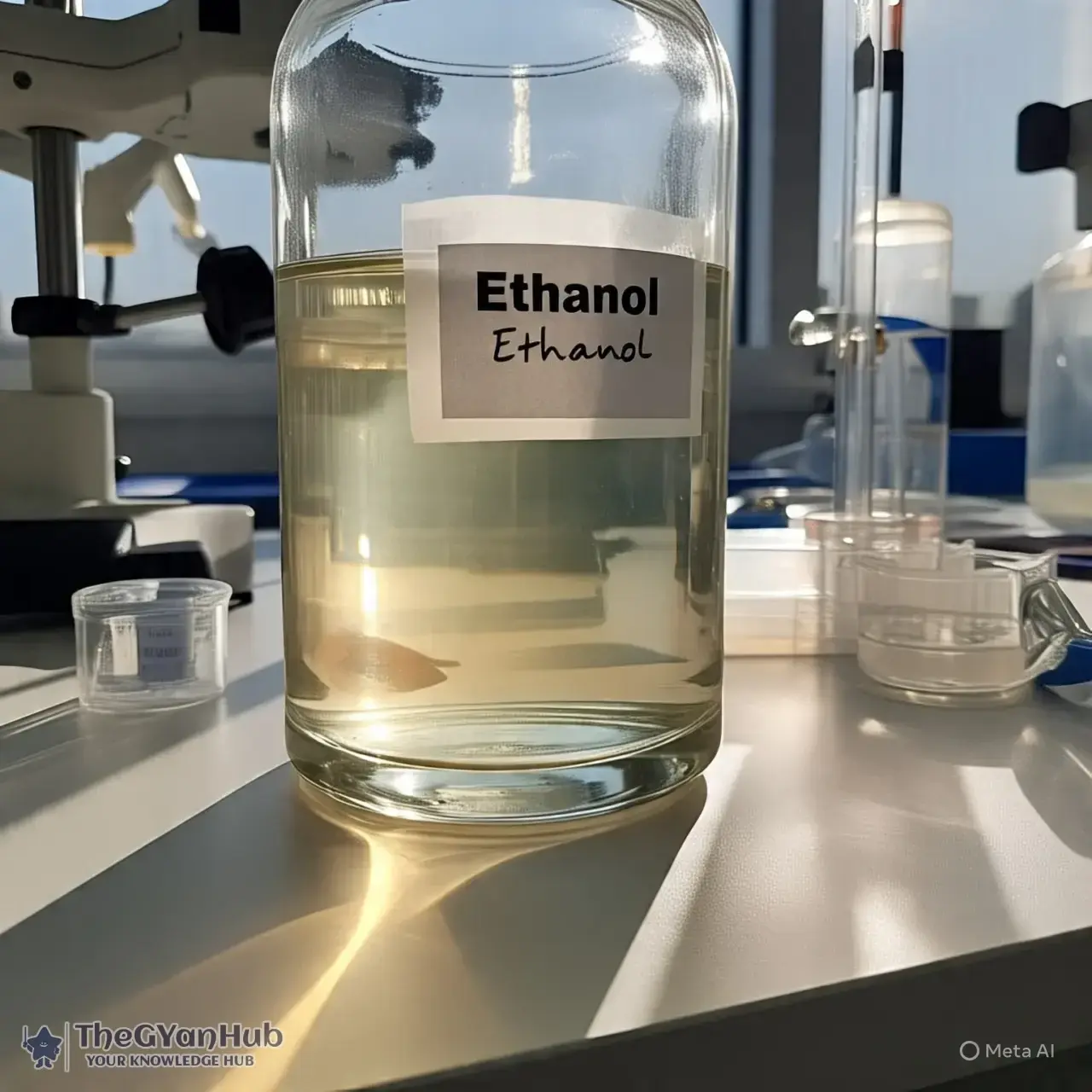
Ethanol is a clear and flammable liquid with a slightly noticeable smell. Chemically, it is known as C₂H₅OH. It is a type of alcohol that is created naturally when sugars are broken down during fermentation. Ethanol finds use in various areas like fuel, medicines, sanitizers, and alcoholic drinks.
How is Ethanol Made?
There are mainly two methods of ethanol production:
Biological Process: In this method, crops rich in sugar—like sugarcane, corn, and potatoes—are fermented using yeast. The yeast converts sugar into ethanol and carbon dioxide.
Chemical Process: In industries, ethanol is also made by reacting ethene (a type of hydrocarbon) with water using a catalyst.
Where is Ethanol Used?
As a Fuel:
Ethanol is often blended with petrol to make a cleaner biofuel. It causes less pollution compared to pure petrol. India is promoting this through the Ethanol Blending Program, which aims to mix up to 20% ethanol with petrol.
In Healthcare:
Ethanol is used in antiseptics, disinfectants, and as a base for making medicines. During the COVID-19 outbreak, it became essential in making sanitizers.
In Industries:
Ethanol is used in making products like paints, perfumes, varnishes, and other chemicals.
In Alcoholic Drinks:
Ethanol is the key component in alcoholic beverages. The strength of any drink depends on how much ethanol it contains.
Future Scope of Ethanol
Rising Use as Fuel:
The demand for ethanol as a fuel is growing. Blending it with petrol helps reduce India’s oil imports and boosts energy independence.
Eco-Friendly Energy:
Ethanol burns cleaner than fossil fuels, producing fewer harmful gases. This makes it a strong step toward green energy.
Support to Farmers:
As ethanol is made from crops like sugarcane and maize, farmers benefit from better crop prices and regular demand.
Job Creation:
More ethanol plants and factories mean more jobs, especially in rural and small-town areas.
Export Opportunities:
With large-scale production, ethanol can become a strong export product and bring foreign income to India.
Stable Demand:
Industries and the medical sector will continue to require ethanol, and its new uses may grow in future technologies.
Banefits of Ethanol
Comes from renewable sources like crops
Helps reduce oil usage
Lowers pollution and greenhouse gases
Drawbacks of Ethanol
If consumed in excess (as alcohol), it can harm the liver, brain, and overall health
Can cause addiction and lead to social issues if misused
Conclusion
Ethanol is not just a chemical—it is a key part of cleaner energy, a healthier environment, and stronger rural economies. Its correct use can support health, farming, industry, and global sustainability.
February 25, 2026
India is transforming its semiconductor design landscape from a cost-effective hub to a powerhouse of capabilities, driving innovation and attracting global investments.

February 20, 2026
As the global AI infrastructure race intensifies, India is making significant strides to establish its presence. However, challenges remain in closing the existing gaps in technology and resources.

February 12, 2026
India is urged to make significant strides in technology to strengthen its diplomatic position on the global stage. This article explores the implications and strategies for achieving this goal.

I’m a passionate writer who loves exploring ideas, sharing stories, and connecting with readers through meaningful content.I’m dedicated to sharing insights and stories that make readers think, feel, and discover something new.